
PavelWohl magazine

Short vs. long VO2Max intervals: which to choose for your performance?
VO2Max intervals are a well-known chapter among endurance athletes. Only, there are no intervals like intervals. While the "traditional" concept consists of longer stretches of continuous exercise, recent findings suggest that there is equal, if not greater benefit to so-called micro intervals...

The second engine: How to train the gut to 120 g of carbohydrates per hour
Most endurance athletes spend hundreds of hours fine-tuning their watts, lactate thresholds, and aerodynamics. But what if we told you that in races lasting over three hours, it’s not the strength of your legs that decides the outcome, but the efficiency of your fuel pump? In modern endurance sports, we are no longer talking about just 'surviving' on one gel per hour. Today’s elite standard is 120 grams of carbohydrates per hour. Let’s look at how to train your digestive system to become your greatest competitive advantage, rather than the reason you fail to finish the race.
The biomechanics of silence: Why does your brain inhibit your performance before your lungs?
In endurance training we often focus on quantity - kilometres, hours, volume. However, modern sports medicine shows us that the key to sustainable performance lies in biomechanical efficiency and neural control of movement. In this text, we break down how the kinetic chain works and why understanding your own neurology is more important than any training chart.

Drop the watts. Why is training in Zone 5 by the numbers a trap?
Most athletes ride VO2 Max intervals the wrong way - they think of them as a competition for the highest average watts. But the reality is that you often just wreck yourself unnecessarily without the desired effect. In our new analysis (based on data from TrainingPeaks), you'll discover why maximizing time near your physiological ceiling, rather than blindly following the numbers on your alarm clock, is the key to success. Train physiology, not ego. Learn how to get the most out of intervals without unnecessarily "concreting" your legs.
Lactate: The Myth of Waste vs. The Reality of Superfuel
Performance at the limit isn't just about willpower; it's about metabolic logistics. One of the most frequently misunderstood processes in the human body is lactate metabolism. While outdated training manuals speak of 'acidification' as the end of the line, modern physiology sees lactate as an efficient energy shuttle. Today, we'll break down how this energy recycling system works and why your ability to burn lactate is what decides the outcome in the final kilometers of a race.

Vertical oscillations: why does "jumping" while running cost you your personal bests?
Stop fighting the tarmac. Start using it. Why do some runners seem to float while others pound the ground? The answer lies in the vector direction of your bounce. Learn how to tame vertical oscillation, save glycogen, and finally get faster without training harder. Fine-tune your machine.

Reasons to forget about static stretching before training
Are you still leaning against a tree and stretching your calves before you head out for a run? You might want to stop. While it feels like you're 'prepping' your muscles, science shows you might actually be putting them to sleep. If you want to move with power and precision, it’s time to trade the old-school static hold for a dynamic wake-up call. Here is the mechanical breakdown of why your warm-up needs a serious upgrade.

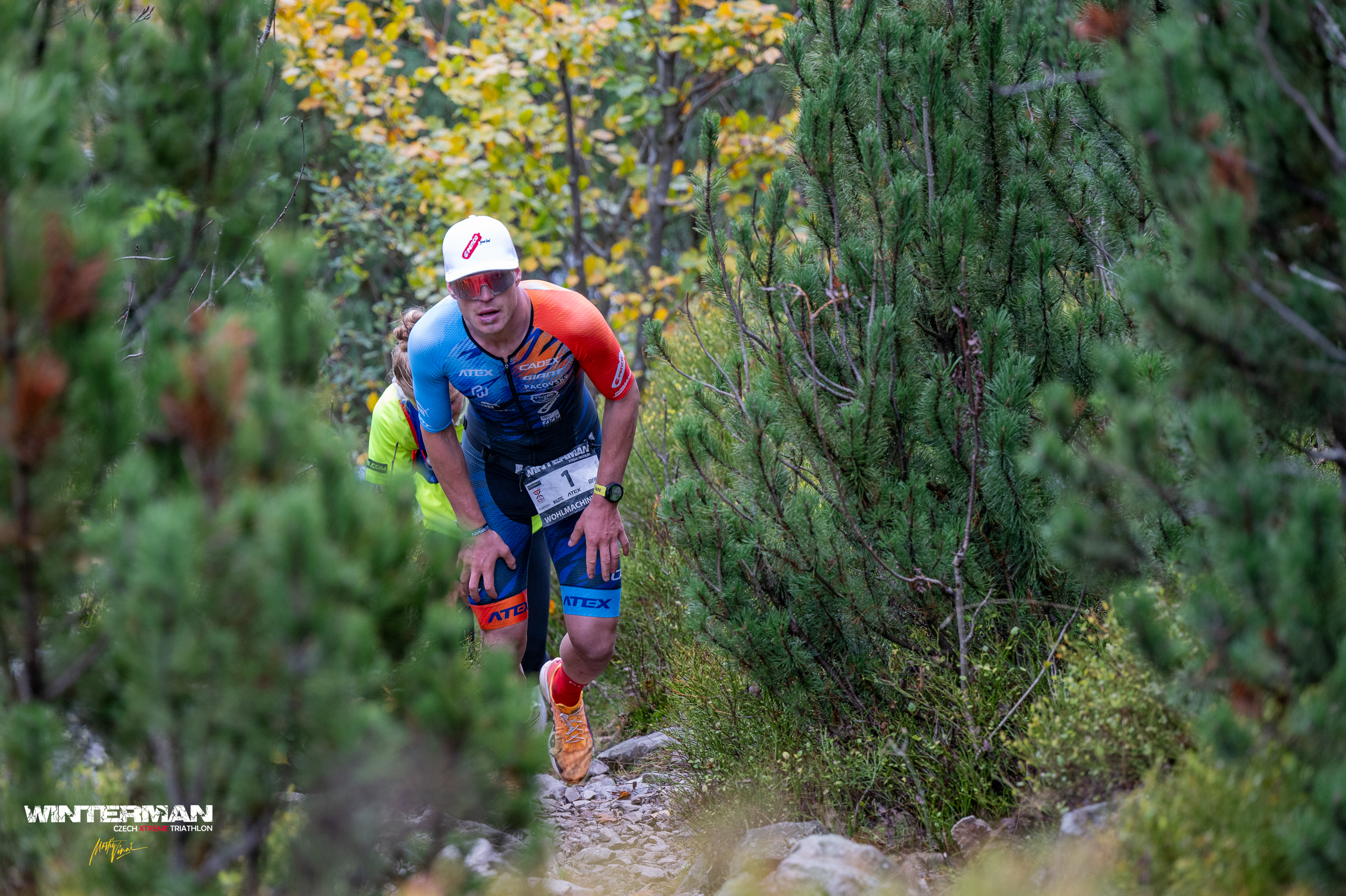
Winterman Extreme Triathlon: When hunter's instinct meets hurricane
Imagine it's 5:30 in the morning. You're standing on the banks of the Elbe, it's October, the darkness is so thick you could cut it, and you know that in a few minutes you have to jump into the water, which is only 12 degrees. Around you are a hundred other crazy people who have one thing in common - respect for the race, which can break you physically and mentally in the first hour.
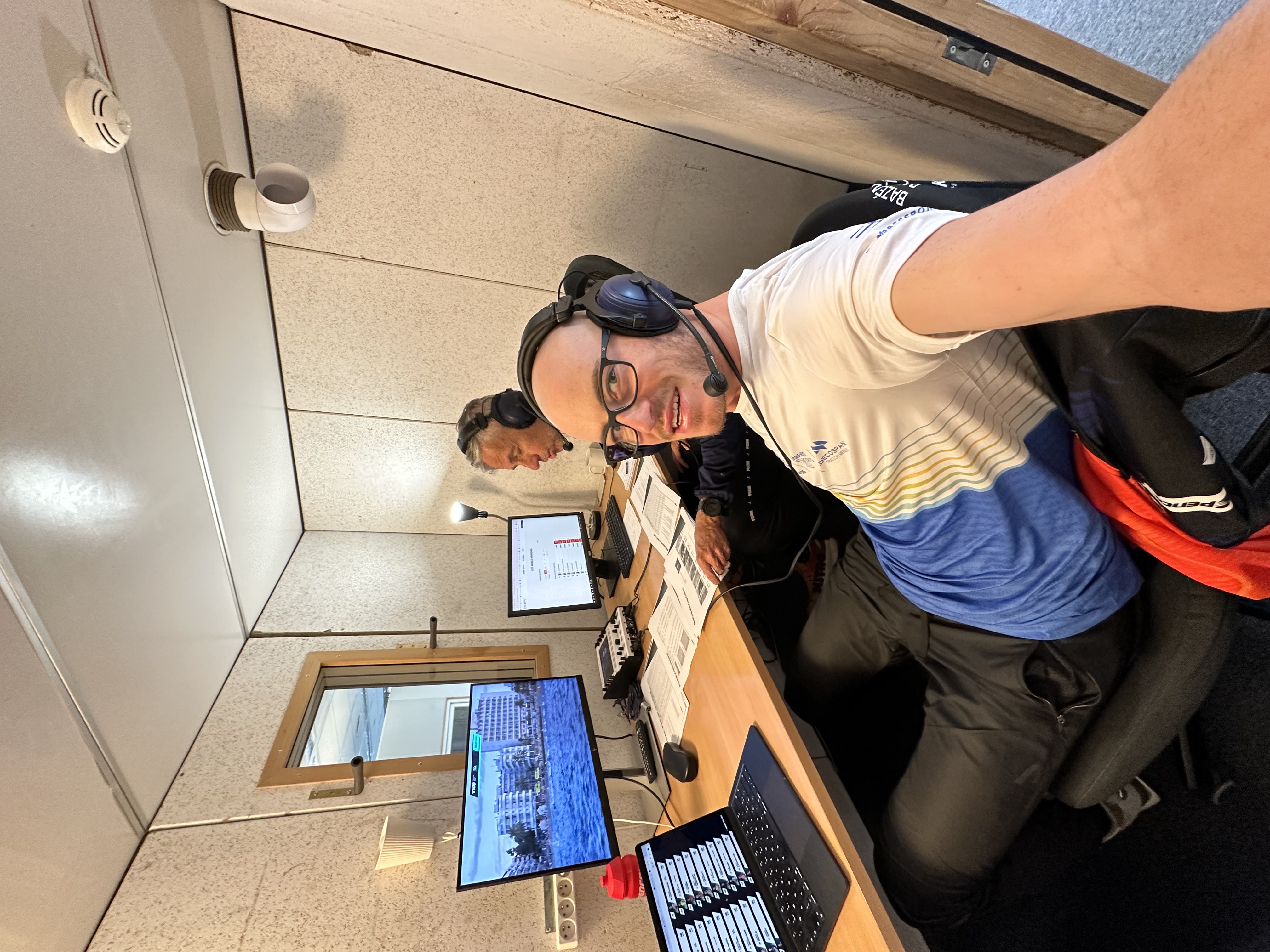
You don't have to go 100% all year: my confession in the Second Phase podcast
I recently accepted an invitation to Brno to be a guest on the Second Phase podcast. With Karolina and Samuel we discussed not only the past season, which was literally like a seesaw, but mainly what probably everyone is interested in this time of year - how to train in winter, what the real life of a pro outside of Instagram is like and what I'm planning for next year.