
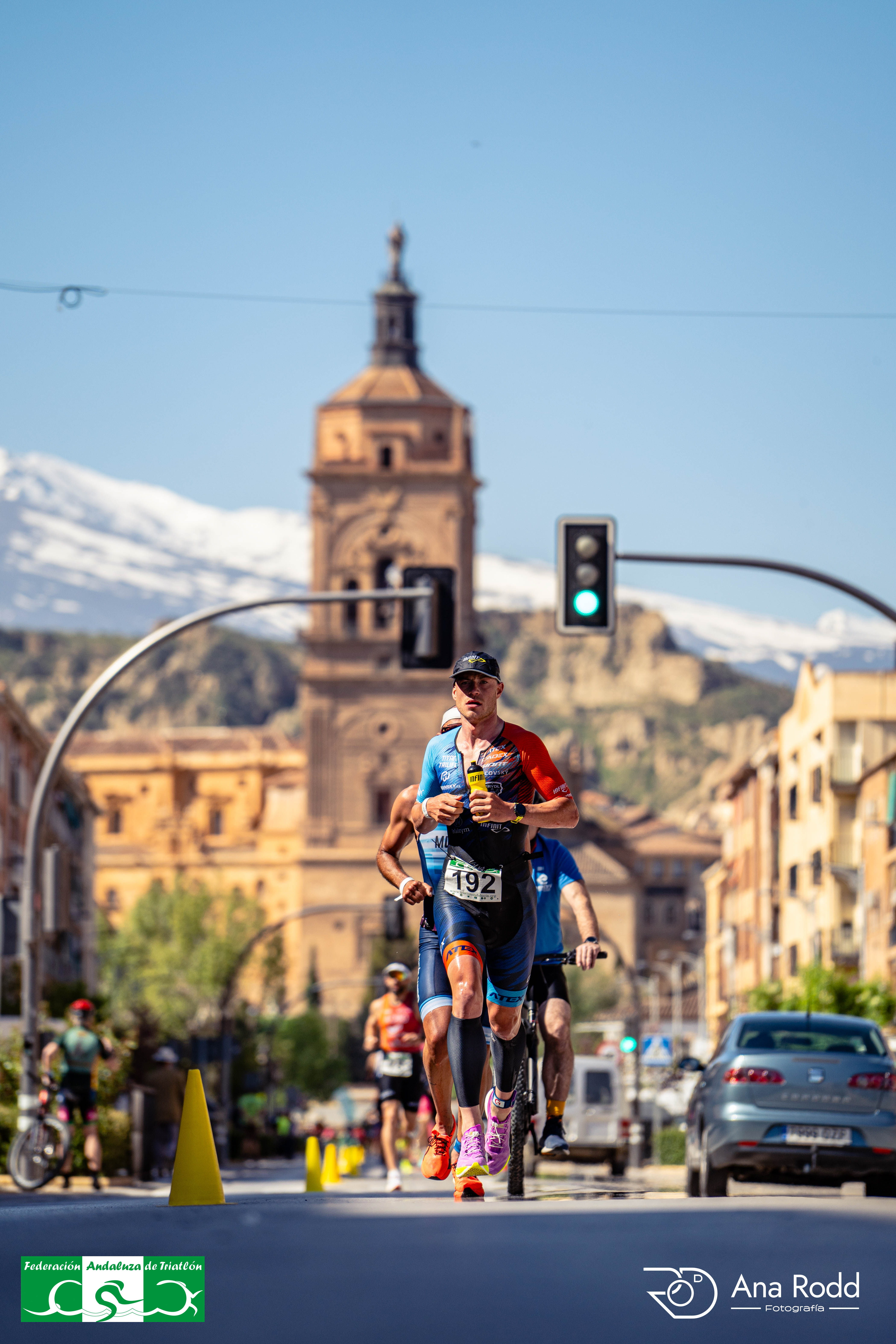
Concrete legs and a head in chaos: Why Brick training takes you up a level
You know the feeling exactly. You've had a tough bike workout, you dismount, put on your running shoes and run out of the depot. And suddenly you feel like those feet belong to someone else entirely. Your stride is heavy, your thighs are stiff, your heart rate is skyrocketing and the first kilometre seems like an insurmountable problem. Welcome to the world of transitions.
The so-called "Brick session" (or brick - probably because that's how heavy your legs feel after a bike) is an absolute staple of triathlon training. It's not just about getting used to the discomfort. It's about literally reprogramming your body.
Let's take a look at what's going on in you during the first few minutes of your run and how to smartly incorporate these workouts so you're literally flying out of the depot on race day.
What happens to your body when you get off the bike?
The feeling of concrete legs is not just in your head, it has clear physiological reasons. When you start running after the bike, your body experiences a triple shock:
-
1. Blood confusion: On the bike, most of your blood is accumulated in your front thighs and buttocks because they do the brunt of the work. But as soon as you hit the ground while running, your body has to immediately shift gears and send blood to your calves, rear thighs and trunk stabilizers. By the time this bloodstream is repositioned (it takes about 10-15 minutes), the heart has to be working at full capacity. That's why at the beginning you feel like you can't catch your breath.
-
2. Shock to the brain and muscles: pedaling a bike is a smooth, circular motion without any impact. Running, on the other hand, is about impact and cushioning (you are carrying 2.5 times your weight). Your brain has to change the commands it sends to your muscles in a flash. It has to go from circling to springing. Brick training speeds up this "computer update" in your head considerably.
-
3. Speed illusion: You're on a bike going 35 km/h and your legs are spinning at a cadence of 90 revolutions. Then when you run out, your brain is confused by the speed. You feel like you're crawling like a snail, but when you look at your watch, you realize you're running well below your race pace. If you don't tame yourself here, it'll catch up with you in a few miles.
How and when do you put Brick in gear? (Don't be a hero)
The biggest mistake age-group triathletes make is the idea that Brick means to go the full 100 km and then run 15 km at race pace. That will just ruin you for the next week. Transitions need to be dosed smartly:
A. Short "reminder" transitions (Year-round)
-
Why: We teach the brain to switch quickly without breaking our legs.
-
How to do it: After any normal (even light) bike workout, put on your shoes and give yourself 10 to 15 minutes of very light trotting. Don't watch your pace. Just focus on a quick cadence of steps (short, brisk strides) and relaxed shoulders. Your body will get used to the transition and you'll move easily the next day.
B. Race Specifics (Last 2 months before the race)
-
Why: We calibrate race pace and teach the body to burn fat when running low on sugar.
-
How to do it: you bike harder intervals at goal pace and within 3 minutes of dismounting you are running. The workout takes 20 to 30 minutes. The key is to keep the first 10 minutes right at your goal pace for the race - you need to tame that feeling of running slowly. Do this once every 10 to 14 days at most.
C. Trial by Fire (Before Ironman/Half)
-
Why: To test your stomach and joint endurance.
-
How to do it: Long bike (e.g. 3 hours at a leisurely aerobic pace) followed by 45-60 minutes of free running. This is not about speed! You're testing if your stomach can handle the running jolts after three hours of eating gels, and getting your ligaments used to the long load.
WOHLMACHINE recommendation
Brick training is not about the kilometers covered. It is about fine-tuning the details. Remember that the first kilometers from the depot are not won with speed, but with your head. Let your legs "thaw out" with short and relaxed steps, watch your breathing and only after 10 minutes, when the blood starts flowing properly, jump into your full performance.